


Fifty years ago, the initiative to revive traditional settlements as model guesthouses opened new paths in Greek tourism policy. However, many of these areas still face incomplete infrastructure, limited road accessibility, and a sense of isolation that discourages visitors. Tourism development remains uneven, with over-concentration in certain coastal zones and underutilization of significant natural and cultural resources.
This is emphasized by the President of the Messinia Hotel Association, Dimitris Karalis, in a detailed statement about the “forgotten” destinations.
As he points out, the Peloponnese is a typical example of this lag, as crucial transport projects are delayed and there is no coherent strategy for utilizing its potential. At the same time, issues like the exclusion of small hotels from financing, high operating costs, the lack of staff, and the uncontrolled spread of short-term rentals weaken the industry. The conclusion is that Greece has significant potential for growth, provided there is political will to strengthen regional destinations.
Karalis’ full statement:
“Fifty years have passed since the late Tzannis Tzannetakis, then General Secretary of the GNTO, and George Rallis, then Minister of the Presidency overseeing tourism, inspired the revival of traditional settlements and their transformation into model guesthouses. Since then, these specific tourist interest areas have faced notable challenges and weaknesses as destinations, with infrastructure deficiencies due to the increase in the tourist flow they attract. Road access in many areas is difficult, the road networks remain poor, and several settlements in the mountainous inland areas are hard to reach, while overall, these areas are distant from major road axes and urban centers. This creates a sense of ‘intense isolation,’ which discourages some visitors, even though it is part of the authenticity of the landscapes.
In conclusion, tourism development has been unevenly distributed so far and is more concentrated in certain coastal areas, without organized planning, resulting in both under-exploitation of significant resources (cultural and natural) and the risk of uncontrolled tourism activities in other regions.
A characteristic example is the Peloponnese, where the neglect of tourism development is evident. The lack of vision and prospects is also reflected in the remaining rudimentary infrastructure, which is still significantly lacking. For instance, the concession contract for Kalamata airport, between the Hellenic Republic Asset Development Fund (HRADF) and private investors, is still gathering dust in the drawers of Parliament, awaiting final approvals, with no one knowing its fate, despite the pressures from the local community and tourism stakeholders. Similar issues are seen in the works for the Kalamata – Rizomylos – Pylos – Methoni road axis, where the completion dates are constantly pushed back from 21/4/27 to 8/11/28 and from 21/4/28 to 8/11/29, with the latest excuse being the non-implementation of the full land expropriations.
And all this, while for 50 years we’ve been hearing the same narrative about the ‘expansion of tourism in space and time,’ while in reality, five primary markets are ‘feeding’ only five regions of the country, ignoring the others, with the Peloponnese being a prime example, as it only accounts for 2% of tourism revenue.
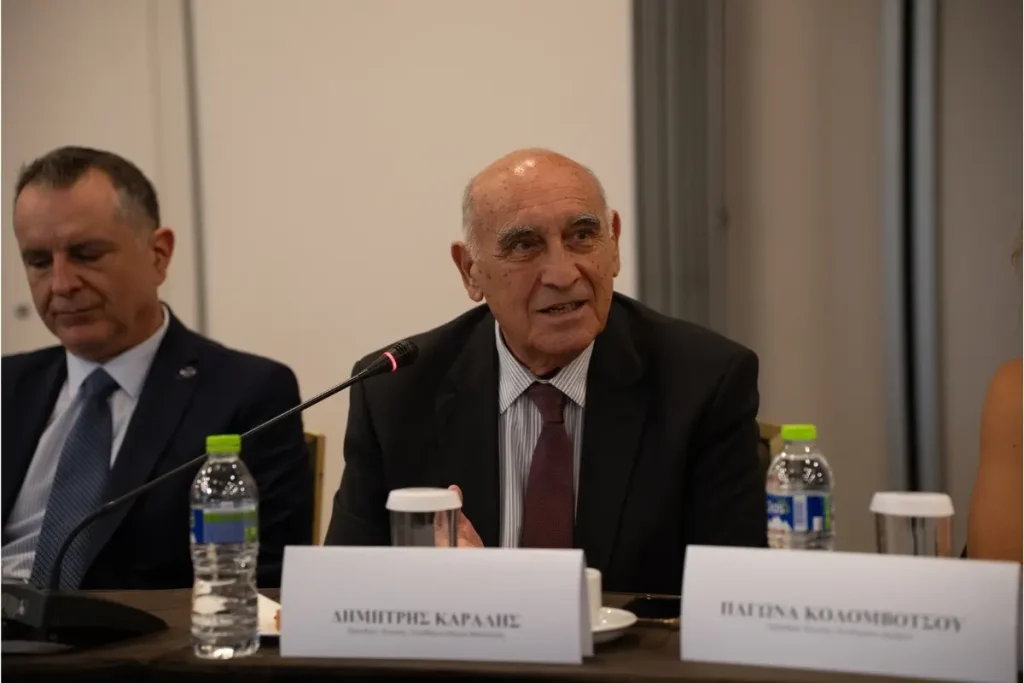
The recent conference organized by Kathimerini and what was discussed at the General Assembly of the Greek Chamber of Hotels clearly highlight the issue of the ‘entrapment’ of tourism in Greece. I will summarize, along with what I personally can contribute:
Sustainability: When 85% of Greek hotels with up to 50 rooms are excluded from funding tools, how can we talk about resilience or qualitative improvement? Much more so when sustainability is linked to the modernization of infrastructure, which is measured by quality indicators. And all this while there are the well-known ‘burdens’ of operating costs across all sectors, from taxation and the unbearable energy costs to commissions, with explosive inflation reflected across the entire supply chain.
Staffing: A dual goal that concerns both purely tourism-related professions and others contributing to the social and economic development of a region. Without staff in areas like safety, health, and education, how can a region develop and retain its working-age population, when housing costs have skyrocketed due to the uncontrolled and rapid growth of Airbnb-type accommodations, which are favored by the state?
Revenue: We hear celebratory reports of a 9% increase in revenue, while the cost of service – especially for small and medium-sized hotel businesses – has skyrocketed. At the same time, we see a decrease in the average consumer spending of visitors, with the only beneficiaries being food businesses, due to the Airbnb phenomenon, and with ‘victims’ not only the hotels but also the restaurants. Also, consider this: In 2000, Greece was visited by 12.4 million tourists, generating 10.1 billion euros in revenue. In 2024, we had 40.1 million tourists, with 21.6 billion euros in revenue. In other words, while initially revenue followed arrivals, it ultimately ended up being about half of what it should have been!
Primary Sector: Instead of functioning alongside the tertiary sector of services and complementing the tourism product through gastronomy and oenology, it remains forgotten by any development strategies and linkages with tourism. This is particularly ironic since, in many areas, such as the Peloponnese, agricultural products are the hallmark of the region. But how can this happen without a link connecting the field with the hotel, the hotelier with the farmer and herder, and the culinary artisan with local products?
Development: Development is linked to size, and these, in turn, are tied to competition. In 2024, Turkey had approximately 61 million tourists and 52.9 billion euros in revenue (867 euros per tourist). Spain had 93.8 million international tourists and 126.5 billion euros in revenue (1,349 euros per tourist). Portugal had 31.6 million tourists and 27.8 billion euros in revenue (880 euros per tourist). In Greece, the corresponding amount was just 538 euros. According to the INSETE multiplier effect, the contribution of tourism to the country’s GDP is estimated at 66.5–80.1 billion euros, or about 28% to 33.7% of GDP.
Conclusion: Greece has room for tourism success, as long as some regions are taken out of the margins. The first victim is the Peloponnese, which has great potential to offer but unfortunately does not receive the proper attention from the relevant state authorities. The reasons are many, some more extreme, wanting to speak of fixations toward certain destinations, and others more conciliatory, explaining that there is room to develop a comprehensive spatial plan and strategy that will solve the problem, provided there is political will. What is certain is that we neither have the time nor the luxury for acrobatics amidst the maze of performance numbers that create a false sense of prosperity but no longer convince anyone. This is why pending issues persist and serious problems are magnified, shifting their resolution from year to year. A bit of seriousness regarding the national asset of Greek tourism wouldn’t hurt.”





