


How a small town in Western Macedonia is reinventing itself
Kastoria is learning to reintroduce itself. A city that lived for decades in the shadowand the shineof the fur industry is now trying to build a new development model guided by tourism, the lake, gastronomy, and specialized forms of tourism. The Mayor of Kastoria, Giannis Korentsidis, and the President of the Kastoria Hoteliers Association, Ilias Anastasiou, open up to TN and describe a city that, despite its limited economic resources, claims a role as a year-round destination, with an unexpected champion being August.
The season here is all year round, emphasizes the mayor from the start, noting that for 2024 the month with the highest occupancy in the citys accommodations was August. This is an evolution he describes as a great surprise for a region without access to the sea, which is also the farthest from the coast in all of Greece. This, he explains, shows that visitor demands have changed. They are not just seeking sun and sea, but experiences, good food, walks in stone alleys, and authentic atmosphere.
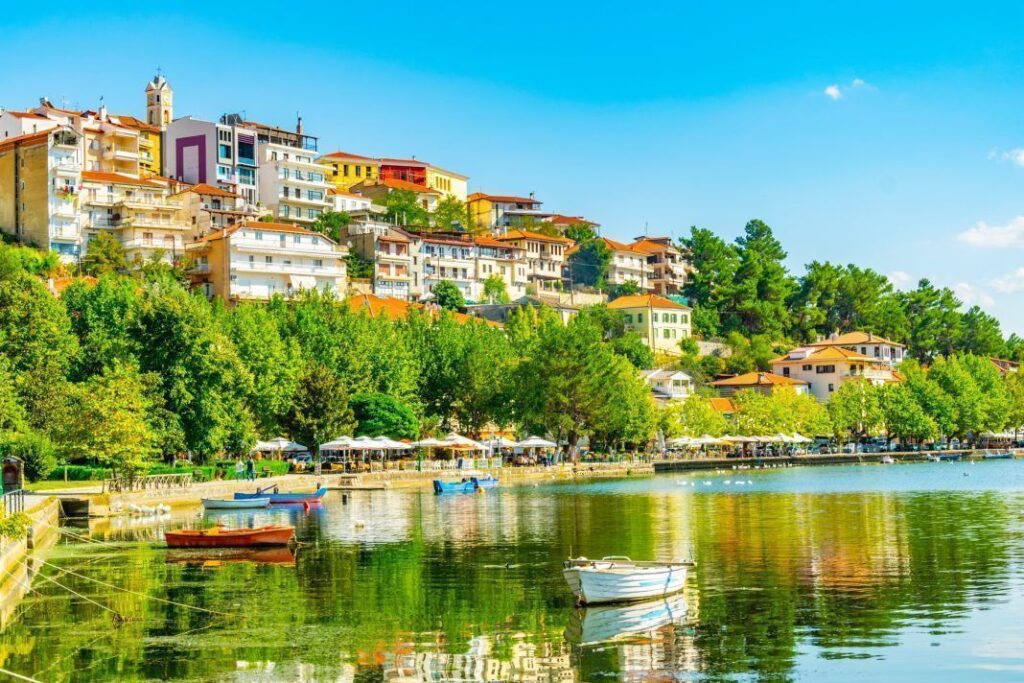
The municipalitys collaborations with travel agencies and close coordination with hoteliers have produced a tangible first result. Kastoria now shows very high occupancy every weekend of the year, while during holidays such as October 28, long weekends, and Christmas, it ranks, according to the mayor, among the countrys top winter destinations.
At the level of municipal infrastructure, the Municipality of Kastoria manages four main structures: the lake boat, which began operation in 2019 and now offers audio tours in various languages, the lakeside prehistoric settlement, the freshwater aquarium, and the Dragon Cave, which, according to the mayor, currently has the highest visitation. Immediate plans include acquiring a second, smaller boat with about 30 seats to serve small groups, operate more frequent trips, and not depend on the concentration of a large number of visitors.

The challenges of the Municipality of Kastoria
Financially, the municipality started from a very low point. Giannis Korentsidis (photo) recalls that in 2019 the Municipality of Kastoria inherited debts of around 15 million euros and was among the last in the country in terms of absorption of European programs. By 2023, he states, almost 80% of obligations have been paid off, the municipality has become a model of good managementas the Secretary General of the Ministry of Interior described itand is now first in Western Macedonia in project approvals and funding. Emergency pandemic funds also played an important role in this turnaround, which the municipal authority used largely to pay off old debts. At the same time, however, salary increases and the additional annual cost of 1.7 million euros for waste management have heavily burdened the budget, while Kastoria is the only municipality in the region that receives no special additional resources, either as a former energy municipality or a small mountainous municipality.
The mayor does not hide the difficulty: With very limited finances, even though we have organized the municipality and are first in projects and approvals, we cannot make the big steps we would like. For example, we do not have the ability to attend a major international fair with our own stand, as Kastoria deserves, which sells just with its photograph. He specifically refers to the WTM in London, where the municipality participated through the Region and EOT, but with minimal space, while other destinations invest in impressive presences. Such events are now mainly done by private investors, he comments, emphasizing that he relies heavily on cooperation with hotels and travel agencies.
The mayors faith in private initiative is evident. As he says, the role of the municipality is to build squares, roads, lighting, parks, and its own tourist structures, but the final visitor experience is determined by the hotel, room, and restaurant they visit. He reveals that two major private hotel investments are expected in the city, with one standing out: a new five-star hotel at the city entrance, on a hill, by a Kastorian entrepreneur with a strong presence in Mykonos and Paros. According to Mr. Korentsidis, the investors goal is to create the number one winter resort in Greece. Such a facility, he estimates, will bring a new, quality audience to the area that until now might not have had a reason to stop in Kastoria.

The collapse of the fur industry
However, behind todays tourism shift lies a deep wound: the collapse of the fur industry. The mayor himself, who served as vice president of the Furriers Association, recalls that in 2014 the fur sector officially made 450 million dollars in export revenue, an amount that was unofficially even higher. Today, revenue barely reaches 20 million dollars. 99% of exports were directed to Russia and Ukraine. The war, sanctions, and the ban on exporting furs from Greece to Russia led to collapse. Of the approximately 250 Kastorian and Siatista stores in Dubai, only 23 remain.
Criticism accepted, but projects continue
In the area of city projects, the mayor acknowledges criticism for delays in squares and roadworks but insists it is an inevitable inconvenience during a period of major renovations. After 45 years, the water and sewage network is being renewed, optical fibers and natural gas have already been installed, and asphalt paving is gradually being completed. A key tool is the Sustainable Urban Development program of the Region of Western Macedonia. While other regional capitals receive 12 million euros, Kastoria secured 18.5 million euros as the champion of absorption. With these funds, the stone alleys and pedestrian streets in Doltso and Apozari will be renovated, the southern lakeside will be redesigned from the former Prefecture parking lot to Doltso, with a bike path and new sidewalks, and the northern lakeside will be upgraded from the small port to the sports fields, with nodes and interventions along the waterfront. By the end of the next term, we will see a completely different Kastoria, says the Mayor with certainty.
The brilliant festive period in Kastoria
Special attention is also given to the holiday atmosphere. Since 2019, the Municipality of Kastoria has dressed the festive season with the program Magical Lake City, from December 8 to January 8a date also associated with the famous Ragoutsaria. The program includes lighting the Christmas tree, major concerts with well-known artists, street parties on the northern lakeside, and youth events.
In Kastorias current narrative, gastronomy is increasingly central. The municipality recently organized a student welcome festival with local products, while for Carnival, a local flavors festival is planned, featuring beans, lentils, traditional pies, and recipes from Kastorian housewivesa living version of Sunday in the village, as it is aptly called.

Hoteliers supporting the Municipality
Supporting the municipal authority, hoteliers today appear more organized than ever. The Kastoria Hoteliers Association, founded in 2019, represents about 1,350 beds from 21 accommodations, mainly four-star hotels and one five-star. Many hotels were built in the 1990s and mainly in the 2000s, but a significant portion did not survive the decade of crises, and about ten units remain closed today. Those that remained are, however, healthy businesses, with a very good reputation and excellent accommodations, emphasizes the Association president, Ilias Anastasiou (photo). Most units are family businesses. He himself, from a family of hoteliers and a graduate in tourism enterprises, says he never seriously considered leaving the area: If you go out on your hotel balcony and see the lake, the calm, the nature, the birds every day, you dont easily trade that for Athens, he notes.
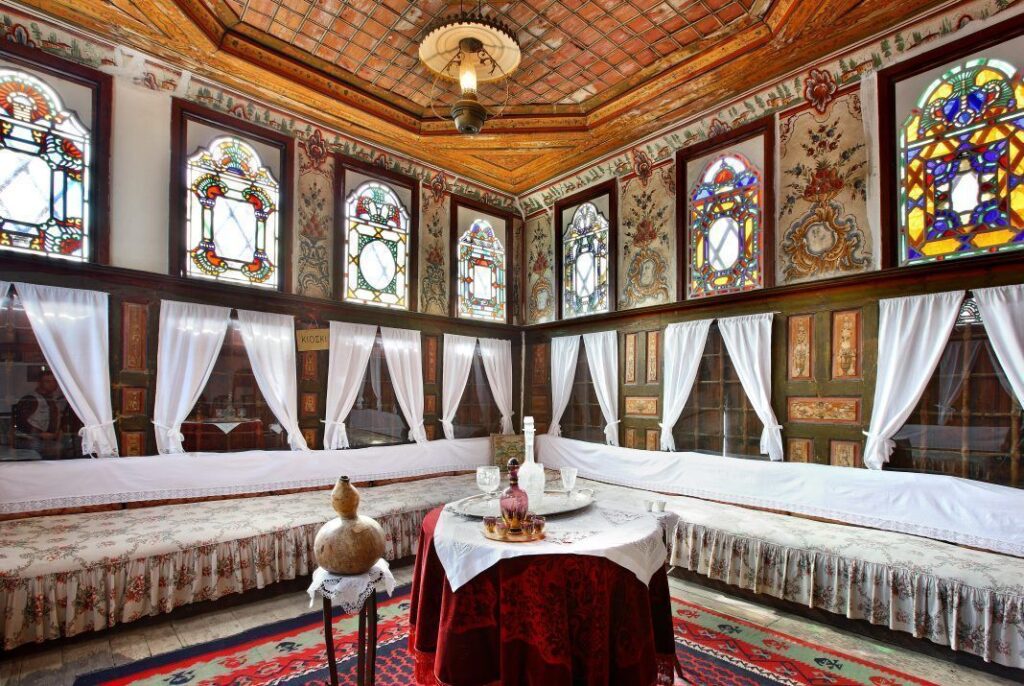
Kastoria leading in quality features
The data he presents is revealing. The annual average hotel occupancy ranges around 4045%, a rate considered marginally sustainable under current conditions. The average room price increased from 51 euros in 2022 to about 65 euros, yet Kastoria remains, as he emphasizes, an economical destination relative to the quality it offers. According to a recent INSETE survey, Kastoria ranked first nationwide both in terms of accommodation quality and customer satisfaction and choice. Regarding average stay, the city has risen from 1.2 nights to 1.7, with a clear goal: to exceed two nights, so Kastoria is not merely a base for Prespa, Nymfaio, and Florina, but a destination that keeps visitors longer.
At this point, the president of the Kastoria Hoteliers Association, Ilias Anastasiou, raised an issue that he says strongly concerns the sector in the area. Despite repeated attempts and requests, the Association has not been accepted as a member of the Panhellenic Federation of Hoteliers (POX). As he stressed, Kastoria hoteliers want to participate actively in the sector nationwide and benefit substantially from the Federations actions, outreach, and interventions, at a time when the destination is trying to establish itself as a four-season tourism spot. Our city is fighting to build a new economic footprint, and the question is why it remains outside the institutional network, something that could offer expertise, access, and collective strength, concludes Ilias Anastasiou.
Greek tourists support the city
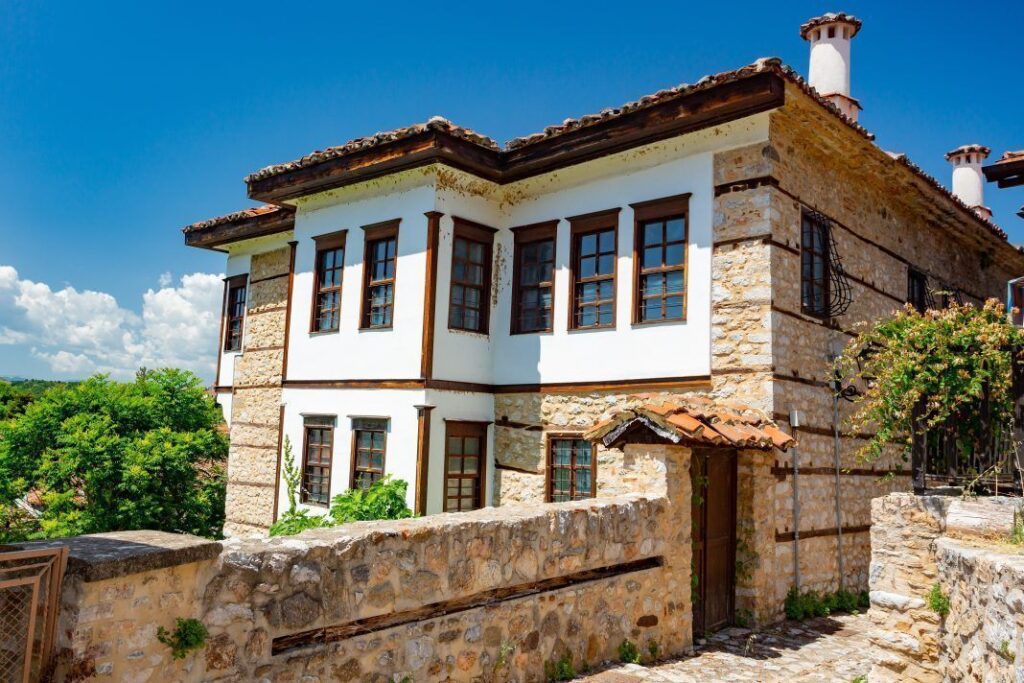
Regarding markets, Mr. Anastasiou estimates that about 6570% of visitors are Greek, while the remaining percentage comes from Northern Europe, the Balkans, Israel, and Italy. A special category includes visitors of Jewish heritage, who seek cities with historical Jewish communities. Kastoria preserves monuments and memories of its old community, attracting this audience. At the same time, in recent years, significant development has been recorded in hiking tourism, both in Grammos and the wider area, with organized hikes by specialized offices. Recently, the city hosted the 8th Panhellenic Trail Meeting. In Nestorio, a modern four-star unit, an investment by a Greek-Australian contractor, has significantly upgraded the areas tourism profile.
New prospects with the E65 highway
The E65 highway, especially the KalampakaKastoria section, is considered decisive for the future. The mayor estimates the road will be ready around Easter 2026, while the president of hoteliers foresees delivery in the second quarter of the same year. When E65 is completed, the AthensKastoria distance will be reduced to about four hours, with a much more comfortable and safe route, potentially changing the rules of the game. The question is whether we will be ready when the road opens, both note, emphasizing the need for better organization of activities: cooking classes, gastronomic experiences, lake activities, themed tours, hiking routes. All of this must be packaged and presented to the visitor before arrival so that, as Mr. Anastasiou says, they do not have to search aimlessly for what to do.
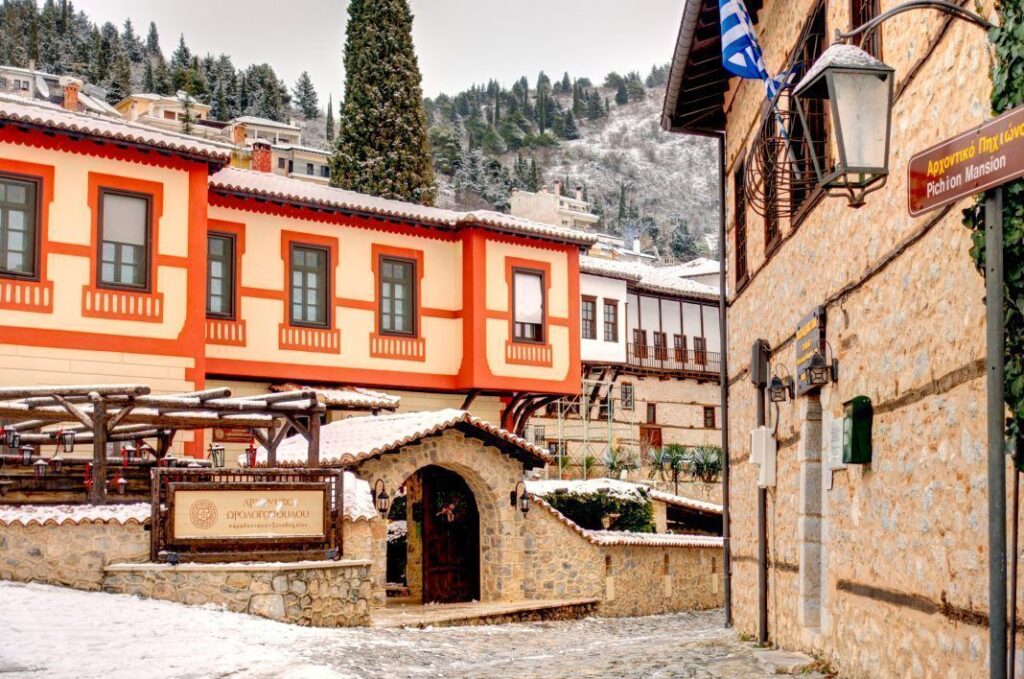
The picture emerging from the statements of the mayor and hoteliers is of a city in a transitional but creative phase. The old economic steam engine of the fur industry has almost disappeared, but Kastoria is building, often stone by stone, a new model of four-season tourism, based on the lake, its architectural heritage, nature, and gastronomy. The goal is to increase the average stay, fully utilize the E65 and new private investments, and establish itself as a stable meeting point for Greek and foreign travelers. All indicators show that small Kastoria will ultimately become one of the major success stories of the Greek hinterland.
Vicky Vamiedaki





