


- 63% view a social media offer with suspicion when it seems “too good to be true.”
- Almost 4 in 10 believe that artificial intelligence will make online scams, especially on social networks, harder to detect.
- Of those who were targeted, 37% now limit their purchases only to large, well-known businesses.
Younger social media users appear more confident in identifying content created with Artificial Intelligence, according to a survey conducted by the Hellenic Confederation of Commerce and Entrepreneurship Institute (ESEE Institute) on behalf of Visa.
The survey examined consumers’ perceptions of Artificial Intelligence and e-commerce, with emphasis on scams and transaction security on the internet and social media.
Distrust toward offers that look “too good to be true”
More than 6 in 10 participants (63%) report being skeptical when an offer seems excessively good to be true, and 5 in 10 are cautious when a post comes from an unknown source or brand. Additionally, 46% are suspicious when the content quality is low and when the payment method seems unusual or unsafe. 44% are wary of an incorrect or suspicious URL link.
Younger people believe they can recognize AI-generated content
Regarding the ability to identify Artificial Intelligence–generated content, 53% of participants say they are not very or not at all confident in recognizing it. 45% feel very or fairly confident in identifying images and videos created with Artificial Intelligence, with this percentage being higher among younger age groups.
4 in 10 believe Artificial Intelligence will make online scam detection more difficult
Four in ten believe that Artificial Intelligence will make it harder to recognize online fraud. 34% think it will complicate detection in some cases but facilitate it in others, while 10% expect no impact.
They check legitimacy but feel overwhelmed by content volume
83% of participants say they check the legitimacy of an online seller before making a purchase, while 76% say they are unlikely to click on an ad that creates a sense of urgency.
Phishing: The most widespread method of deception
Nearly 6 in 10 participants say they have been targeted through phishing. Notably, scams using Artificial Intelligence or deepfake techniques are now recognized by 7% of the sample.
Impact of fraud on future purchases – Purchase intentions
The consequences for those who ultimately fell victim to online fraud include financial loss (22%), emotional distress (17%), and hesitation or fear toward online transactions (16%). Among those who suffered financial loss, 63% lost amounts up to 199 euros. However, the effects extend beyond financial damage: after a fraud attempt, 41% say they have become or will be more cautious but remain open to trusting smaller or new businesses for online purchases, while 37% limit their purchases only to large, well-known businesses.
Challenges in avoiding social media scams
Almost 6 in 10 believe that online scams on social networks are becoming increasingly sophisticated, while 37% think scammers successfully imitate credible brands or individuals, and 27% believe that the large volume of ads and sponsored content that appears legitimate makes fraud harder to identify.
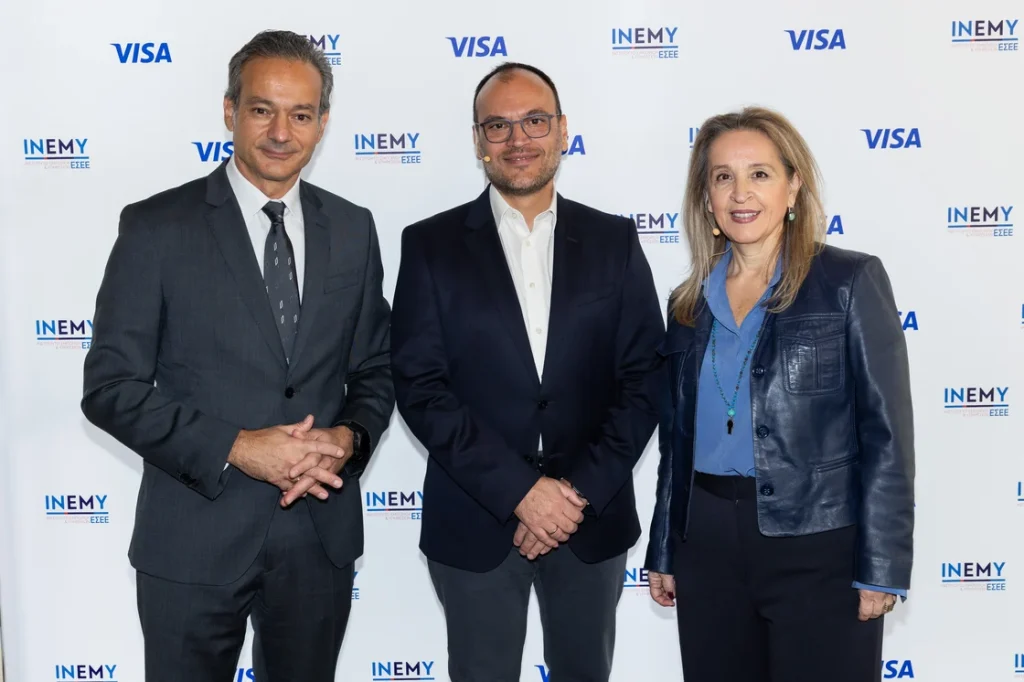
Nikos Petrakis, Country Manager of Visa in Greece, stated:
“The survey records the complexity of online fraud in the age of Artificial Intelligence. Visa is intensifying its efforts against fraud on social media, combining decades of experience with advanced AI technology and close cooperation with banks, merchants, and digital platforms, aiming for e-commerce to meet the highest safety standards. For more than 30 years, Visa has used artificial intelligence tools to secure payments and stay ahead of evolving threats. This is why we have invested 12 billion dollars in technology to prevent fraud and safeguard the network just in the past five years. However, awareness is as critical as innovation: with 41% of Greeks believing that AI will make fraud detection more difficult, Visa is collaborating across the ecosystem to empower consumers, helping them recognize scammers using AI and stay safe in an increasingly interconnected world.”
Stavros Kafounis, president of the Hellenic Confederation of Commerce and Entrepreneurship, stated:
“The study by Visa and the ESEE Institute highlights particularly interesting findings, from which the following stand out: First, consumers appear alert to potential scams, while also seeking advisory support from the State and institutional bodies. Second, attitudes toward Artificial Intelligence vary by age group: younger participants show greater confidence in their ability to identify AI-generated content. Third, skepticism is expressed regarding the impact of Artificial Intelligence on scams, as roughly four in ten participants believe its use will make fraud recognition more difficult.”





