


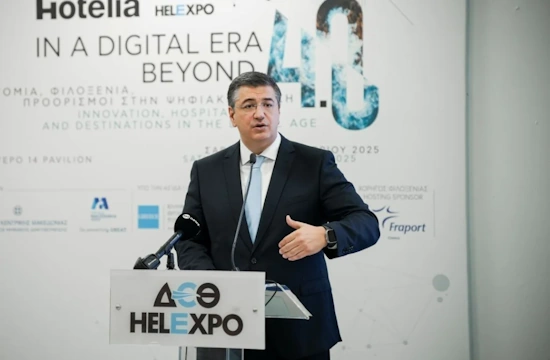
Next April, the first comprehensive, common EU strategy for tourism will be presented, as announced by Commissioner for Sustainable Transport and Tourism Apostolos Tzitzikostas at the opening of the Philoxenia–Hotelia and Food & Drinks by Detrop exhibitions in Thessaloniki.
“We are preparing something truly historic. It made no sense for such an important sector not to have a common European strategy. This new strategy invests in the authenticity of the tourism product, just like our country,” he said. As he noted, Greece remains one of the five most popular destinations in Europe and in the Top-10 worldwide.
The objectives of the new EU strategy
The Commissioner presented the guidelines on which the European strategy will be based, with an emphasis on:
- strengthening Europe’s competitiveness,
- promoting innovation, investment and the digital transition,
- managing tourism flows in a sustainable way,
- protecting cultural and natural heritage,
- improving the traveler’s experience,
- and shaping a more balanced development model.
The three main priorities, as he described them, are:
- Maintaining Europe as a leading tourist destination internationally.
- Strengthening local communities and businesses so that they can benefit substantially from tourism.
- Promoting European identity – as, as he stressed, “Europe does not need a commercial brand; Europe is the brand”.
Data on Greek and European tourism
Mr. Tzitzikostas also presented the most recent data reflecting the dynamics of Greek tourism. In 2024, approximately 123 million overnight stays and revenues of over 20 billion euros were recorded, while more than 400,000 jobs are directly linked to the sector. The contribution to GDP reaches 20%, one of the highest percentages in Europe.
Correspondingly, at the EU level, 2024 was a milestone year: almost 3 billion overnight stays were recorded in tourist accommodation, with hotels maintaining a leading role, reaching 1.9 billion overnight stays. European tourism has now fully returned to pre-pandemic levels.
Challenges and transformation
Despite the strong recovery, the Commissioner pointed out that the sector is facing significant challenges: the climate crisis, pressure on infrastructure and natural resources, the growing need for skilled personnel and shortages in the labor market, intensified international competition and unbalanced flows in certain destinations.
“All these challenges require not just management, but transformation. They require cooperation. They require a new modern strategy,” he stressed, underlining that the new European approach will be a support tool for countries and tourism businesses.





